


Solid Oil Bearings
Wholesale Solid Oil Bearings Supplier
Professional Manufacturing
Lianyi Bearing is a manufacturer and exporter of a full range of tapered roller bearings, deep groove ball bearings and housed ball bearings. There are more than 300 employees, including engineering and technical personnel, and the factory building area is 30,000 square meters.
R&D and Patents
Currently, there are 40 R&D engineers in the R&D department, including more than 20 with master's degree or above. We own more than 30 patents and software copyrights, and have developed one of the most comprehensive sliding bearing R&D systems in the world.
Quality Control
We use advanced automated production lines and testing lines for tapered rollers, deep groove ball bearings, and seated ball bearings. We strictly adhere to the ISO 9001 quality management system to provide you with high-quality and reliable products.
Solution Provider
We provide solutions based on your requirements, specified materials and product structures are available, and will provide a complete DFMEA for the product as soon as possible for subsequent production. And our proprietary materials are competitively priced.


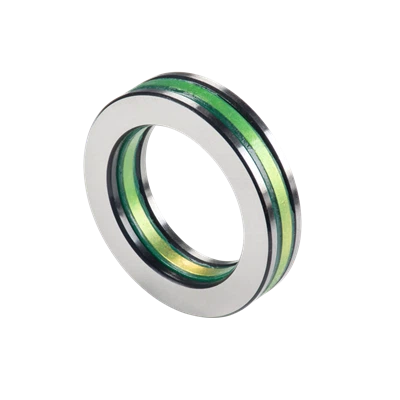


Product Categories
Latest Products


Custom Bearing Specifications
|
Specifications |
Available Options |
|
Bearing Types |
Permanent Self-Lubricated Greaseless Oil Less Maintenance Free Self-aligning |
|
Applications |
Medium-to-Heavy Loads Slow-to-Medium Speeds |
|
Environment |
Wet Dry High Temperature Low Temperature Hostile Irradiated or Radiation Environment |
|
Configurations |
One-Piece Bushings Split Bushings Two-Piece Bushings Flanged Bushings Self-Aligning Spherical Bushing Thrust and Expansion Washers Liners Flat Plates Radialube® Spherilube® Plates Special Shapes |
|
Peripheral Parts |
Support Systems Structural Components Mating Pins Shafts Housings |
|
Manufacturing Process |
CNC Machining Welding Painting |
|
Lubricant Form |
Dry Solid Permanent Self-Lubricating |

Introduction to Solid Oil Bearings
Thanks to advanced development and technologies, a new type of maintenance-free bearing has been developed. These bearings do not need to be lubricated because they are filled with a solid, porous resin that is impregnated with lubricating oil. As the bearing moves, this lubricant is continuously released through capillaries to ensure its smooth running.
Since the oil is maintained in a solid material, there is a minimum probability of leakage from the bearing, prolonging the service life of the bearings in applications where there is high centrifugal force or vibration. A space filled with a lubricated material also prevents dirt from entering the bearing, but does not replace seals.
Solid Oil:
Bearings filled with Solid Oil contain two to four times more oil than bearings using a conventional grease fill. Solid Oil cannot be washed out and virtually fills all the free space, thus limiting the amount of dirt and contamination that can enter the bearing. The polymer filling physically supports integral seals, reinforcing their effectiveness under washdown conditions.
The principle of Solid Lubricated Bearings
The basic working principle of solid-lubricated bearings is that in the initial operation stage, the solid lubricant on the bearing surface forms a transfer film due to mutual friction and covers the opposite wear parts, and finally forms a solid lubricating film to achieve the purpose of self-lubrication. It cuts off the direct contact between the workpieces, thereby well protecting the abrasive parts and extending the service life of the bearings and workpieces.

Classification of Solid Lubricated Bearings


Inlaid Solid-Lubricated Bearings
The lubrication of embedded solid-lubricated bearings relies on solid lubricants embedded in holes or grooves on the base to achieve lubrication. The base is generally made of metal. Commonly used base materials include various grades of copper alloys, steel, cast iron, and bimetals. wait.
Multi-Layer Composite Solid-Lubricated Bearings
Multi-layer composite solid-lubricated bearings are made of multiple layers of materials. Each layer of material has a different function. For example, the base layer is used for load-bearing and retention; the middle layer is used to enhance bonding strength, heat dissipation, and assist anti-wear. ; The inner layer is made of solid lubricating material, which is in direct contact with the opposite wear parts for anti-wear and friction reduction.
Integral Solid-Lubricated Bearings
Integral solid-lubricated bearings refer to the entire bearing made of materials with self-lubricating properties. They are generally made of engineering plastics or high-strength resins produced by injection molding, molding, winding or machining processes, such as polytetrafluoroethylene and polyether ether ketone, polyformaldehyde, etc. themselves have lubrication properties, a certain load-bearing capacity, good corrosion resistance, and excellent performance under specific working conditions.
Features of Solid Oil Bearings
Long Service Life
- An increase in operating temperature pushes the oil toward the surface of the polymer material, supporting consistent lubricant supply. During shutdown, any excess oil is re-absorbed back into the polymer material.
Extended Lubricant Life
- With Solid Oil bearings, a large amount of oil is available (two to four times more compared to conventional grease fill).
- The Solid Oil polymer structure eliminates lubricant churning.
- Solid Oil is a high-quality synthetic oil that resists oxidation.
Resists Washout
- Solid Oil cannot be washed out and virtually fills all free space, limiting the amount of wet contamination that can enter the bearing.
- Water cannot mix with the oil or Solid Oil polymer.
Virtually Eliminates Lubricant Leakage
- Solid Oil retains oil in the bearing.
- Integral bearing seals further increase the oil retention.
Protects Against the Ingress of Contaminants
- Close osculation between Solid Oil and the rolling elements and raceways significantly reduces the ingress of contaminants.
- Solid Oil provides additional support for integral bearing seals.
The Advantages of Solid Lubricants
Ideally, it fills the entire bearing cavity without impeding the rolling elements and the physical nature of the polymer adds another layer of protection that grease alone could never offer.
Protecting Against Contamination
Importantly, when contamination enters the interior of a greased bearing, it will circulate with the grease, causing damage. Solid lubrication stops any contaminant that manages to work its way past the seal, keeping it away from the elements and races and preventing an inevitable failure. In dusty or dirty applications, solid lubrication’s ability to keep out contaminants considerably improves bearing life.
Limiting the Infiltration of Liquids
The polymer in solid lubrication limits the ability of water and cleaners to wash away oil, a problem known as washout. In contrast, the oil film between ball and race is more susceptible in greased bearings. The less oil within a bearing, the higher the risk of a catastrophic failure.

Applications of Solid Oil Bearings
Solid oil bearings find applications in a wide range of industries and settings:
Industrial Machinery
They are commonly used in industrial machinery, such as conveyor systems, pumps, and fans, where continuous operation and minimal maintenance are essential.
01
Agriculture
Solid oil bearings are ideal for agricultural equipment, including tractors, combines, and seeders, where they can withstand exposure to dust and moisture.
02
Mining
In the mining industry, solid oil bearings are employed in heavy equipment like crushers, screens, and conveyor belts, where they endure demanding conditions.
03
Food and Beverage
These bearings are well-suited for food and beverage processing equipment, as they eliminate the risk of contamination from lubricants.
04
Renewable Energy
Solid oil bearings are increasingly used in wind turbines and solar tracking systems, where they reduce maintenance and enhance reliability.
05
The Differences Between Solid and Oil Lubricants

Solid Lubricants
Solid lubricants are oil-filled microporous polymers. They are ideal for reducing friction and preventing wear, particularly in situations where options such as oil or grease would not provide high enough levels of lubrication. Solid lubricants are also an excellent choice for areas that are challenging to access for relubrication.
Advantages of Solid Lubricants
- In addition to providing reduced friction and wear, solid lubricants offer the advantage of permanent lubrication with no leakages. They generate low amounts of heat and offer low startup torque.
- Solid lubricants are ideal for use in the food industry, as they are NSF certified for food processing. This type of lubrication will keep contaminants out, and it is compatible with acids and other corrosive chemicals. As such, it functions well in wash down applications.


Oil/Grease Lubricants
Oil/Grease lubricants are typically more popular than solid lubricants. The two most common types of oil for oil lubricants are synthetic and natural mineral oil. Most often, manufacturers will mix the chosen oil with a thickening agent to create varying viscosities and properties.
Advantages of Oil/Grease Lubricans
Compared to solid lubricants, oil lubricants are typically easier to control and keep clean. They function well at high speeds and temperatures, and offer less start up and running torque. Oil lubricants also offer the added advantage of reducing bearing noise and vibration.

Factors That Can Impact Bearing Lubrication
Working Temperature and Environment
Under higher temperatures, lubricants naturally experience faster deterioration and, consequently, a rapid loss in their effectiveness. This breakdown occurs because the lubricant’s oxidation rate accelerates, causing it to evaporate faster. Colder environments also have an adverse effect on bearings as their oil and grease become too viscous. When lubricants have a higher viscosity, they cannot form the all-important film that separates the rolling elements from other contact surfaces.
Operating Hours
If your electric motor is a critical asset and runs continuously, it will need lubrication more often than motors that run periodically. Monitor the hours the motor has been operating to determine when it's time to relubricate the bearings.
Bearing Type and Size
The size and type of a bearing often dictate how long a lubricant will last and how much of it is required. Size is simple enough; the bigger the bearing is, the more lubricant it will need to perform optimally during its lifetime. Meanwhile, the grease used in shielded and sealed bearings generally lasts longer than those used in open ball, thrust, and roller bearings.
RPM
Motors operating at high rotations per minute will break down their lubricants faster than those running at lower speeds because higher speed applies more heat to the grease and thus breaks it down faster.
Vibration
Strong vibrations may cause motor lubricants to flow freely into the path of the rolling bearing element, where it gets worked and heated excessively, reducing lifespan.
Lubricant Type and Viscosity
Bearings require oil or grease for lubrication, and using the wrong type can negatively impact its operation. Grease is a semi-solid lubricant more commonly used for bearings operating in most linear guide and drive applications because of its longer lifespan, better adherence to bearing surfaces, and is less likely to run off or be ejected from rotating parts compared to oil.
Proper Procedure Tips for Bearing Application
Step 1: Cleaning
In this first step, you need to remove any existing oils, anti-corrosion coatings and greases. This part is essential because the operating life and reliability become more critical and help eliminate any potential incompatibilities.
Step 2: Ensure Proper Fill Quantity
Proper fill quantity ensures that all contact surfaces have a suitable lubricating film. This step is crucial because, as we've discussed already, over- and under-lubrication are both detrimental to bearing operating life. Over-lubrication can increase internal friction, which leads to extra heat generation while under-lubrication can lead to wear or lubrication starvation due to contact surfaces not having enough lubrication.
Step 3: Determine Bearing Free Space
The proper fill quantity of a grease lubricated bearing is frequently specified as a percentage of the bearing's free space, therefore, it's important to determine the free space correctly.
Step 4: Run-In Procedures
Proper run-in procedure is crucial to the bearing and lubricant's performance in the application where high speeds, fill quantities, and specific pre-loads are critical.
Innovation Patents
LIANYI Bearing owns more than 30 patents and software copyrights. Our independently developed self-lubricating and water-lubricating materials are unique and have the advantages of oil-free, maintenance-free and low-cost.

Frequently Asked Questions
Q: Do solid bearings need lubrication?
Q: Is oil lubrication bearing better than grease?
Q: What is a permanently lubricated bearing?
Q: What is an example of a solid oil?
Q: Can you grease an oil bearing?
Q: Which bearing should you not lubricate?
Q: What is the best thing to lubricate bearings with?
Q: What type of bearing lasts the longest?
Q: What happens if you don't lubricate bearings?
Q: Is Lithium Grease good for bearings?
Q: How often do you need to oil bearings?
Q: How much grease do you put in a bearing?
Q: How do you know when a bearing has enough grease?
Q: Can you use vegetable oil as lube for bearings?
Q: What type of lubricant should be used for front wheel bearings?
Q: Do bearings need time to break in?
Q: Do you need to oil sealed bearings?
Q: Is marine grease good for wheel bearings?
Q: Can you spray white lithium grease on bearings?
Q: What happens if you put too much grease in a bearing?
Q: Can I use cooking oil for bearings?
Q: Does olive oil work for bearings?
Q: Can you use silicone oil on bearings?
s one of the leading solid oil bearings manufacturers and suppliers in China, we warmly welcome you to buy solid oil bearings made in China here from our factory. All customized products are with high quality and competitive price. Contact us for more details.
railway user bearings, suspension user bearings, self-lubricating bearings