


Hydro Bearings
Wholesale Hydro Bearings Supplier
Professional Manufacturing
Lianyi Bearing is a manufacturer and exporter of a full range of tapered roller bearings, deep groove ball bearings and housed ball bearings. There are more than 300 employees, including engineering and technical personnel, and the factory building area is 30,000 square meters.
R&D and Patents
Currently, there are 40 R&D engineers in the R&D department, including more than 20 with master's degree or above. We own more than 30 patents and software copyrights, and have developed one of the most comprehensive sliding bearing R&D systems in the world.
Quality Control
We use advanced automated production lines and testing lines for tapered rollers, deep groove ball bearings, and seated ball bearings. We strictly adhere to the ISO 9001 quality management system to provide you with high-quality and reliable products.
Solution Provider
We provide solutions based on your requirements, specified materials and product structures are available, and will provide a complete DFMEA for the product as soon as possible for subsequent production. And our proprietary materials are competitively priced.


Product Categories
Latest Products


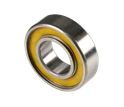
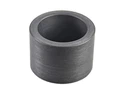
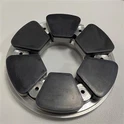
Custom Bearing Specifications
|
Specifications |
Available Options |
|
Bearing Types |
Permanent Self-Lubricated Greaseless Oil Less Maintenance Free Self-aligning |
|
Applications |
Medium-to-Heavy Loads Slow-to-Medium Speeds |
|
Environment |
Wet Dry High Temperature Low Temperature Hostile Irradiated or Radiation Environment |
|
Configurations |
One-Piece Bushings Split Bushings Two-Piece Bushings Flanged Bushings Self-Aligning Spherical Bushing Thrust and Expansion Washers Liners Flat Plates Radialube® Spherilube® Plates Special Shapes |
|
Peripheral Parts |
Support Systems Structural Components Mating Pins Shafts Housings |
|
Manufacturing Process |
CNC Machining Welding Painting |
|
Lubricant Form |
Dry Solid Permanent Self-Lubricating |
Introduction to Hydro Bearings
Hydrodynamic bearings are widely used in high-performance machinery to provide reliable operation over extended periods of time. Hydrodynamic bearing operation is largely non-contacting, providing theoretically infinite life when properly designed and maintained.
These bearings play a critical role in the operation of equipment found in power generation plants, oil refineries, petrochemical plants and other process plants, and in large marine propulsion machinery.

Working Principle of the Hydrodynamic Bearing
Before the shaft starts to rotate, both the shaft and the outer sleeve are in contact due to the self weight. As the shaft tends to rotate the lubricant in between the shaft and the sleeve tends to get squeezed and ultimately forms a boundary lubrication between the shaft and the sleeve but still a slight amount of metal to metal contact remains.
As the shaft tends to rotate rapidly, the fluid lubricant is pumped by the shaft. The lubricant surface near to the shaft has a velocity which differs from the surface velocity of the oil surface near the sleeve. This causes a pumping action in the lubricant. The pumped lubricant ensures that the shaft and the sleeve remain out of contact. This phenomenon of the lubricant pumping itself to keeps two mating surfaces out of contact is termed as “Hydrodynamic Lubrication” and hence the name “Hydrodynamic Bearing”.
This principle ensures that the shaft remains out of contact when required i.e. during running. But a problem exists in this, the oil in between the sleeve and shaft tends to flow towards you or away from you when you look at. Hence a copious-continuous flow of the lubrication has to be ensured for the bearing to work perfectly compensating the lubricant loss.
Types of Hydro Bearings

Fluid Bearings: Hydrostatic
Fluid bearings reduce friction through the use of fluids, specifically lubricants. Due to the spatial clearance between the shaft and the housing space within the bearing, the neutral position of a shaft is always asymmetrical, but never centered within the bearing - the shaft is consequently touching the bearing surface. The goal of fluid bearings is to use its lubricants to lift and suspend the shaft so there is no metal on metal contact between the shaft's journal and the bearing surface. The lubricant must undergo enough pressure to form a layer that converge between the journal and the bearing, which should be enough to lift the shaft.
Fluid Bearings: Hydrodynamic
In contrast to hydrostatic fluid bearings, hydrodynamic bearings use shaft rotation speeds to produce the fluid flim layer. The lubricant in hydrodynamic fluid bearings are not always entirely filled, instead there could be just enough lubricant to permit a process phenomenon otherwise referred to as pressure wedge. It is this pressure wedge that lifts the shaft from the bearing surface, preventing metal on metal contact during rotations. Multiple factors help create the pressure wedge: speed of the shaft's rotation, the viscosity or stickness of the lubricant, and the force exerted from the load onto the shaft. What makes these bearings more dynamic is because there is no need for any external pumps to constantly supply the necessary pressure.

Specifications of Hydro Bearings
Lubrication
A suitable lubricant must always be present to ensure safe operation of hydrostatic and hydrodynamic bearings. The lubricant needs to be cooled to remove the heat generated by the oil shear and it must be warm enough to flow freely. The lubricant must be filtered so that the average particle size is less than the minimum film thickness.
Speed Limits
Hydrostatic and hydrodynamic bearings have only viscous friction associated with a fluid film layer being sheared during the motion of the bearing. They can experience hydrodynamic effects in a high speed condition if the lands are too wide and considerable heat can be generated as a result. The approximate maximum speed is 1,000,000 DN. The DN number describes the bearing diameter in mm (D) and top speed in rpm (N).
Accuracy
The accuracy of these bearings types is determined by the accuracy of the components. Hydraulic linear motion bearings have been built with submicron/meter accuracy.
Stiffness and Damping
Hydrostatic and hydrodynamic bearings do not have loss of contact problems that sliding or rolling contact bearings that are preloaded against each other have. They can easily be in the Newton per nanometer range for stiffness. Due to the thin oil film in the bearing gap, these bearings have excellent damping capabilities in both normal and tangential bearing directions.
Thermal Performance
In general, hydrostatic bearings are not used where speeds greater than 2 m/s are encountered because viscous shear of the fluid in the bearing gap generates too much heat. Hydrostatic and hydrodynamic bearings get energy in the form of a flow at a pressure.
Size and Weight
These bearings take up very little space; however the plumbing requirements may be significant. They have very high performance -to-weight ratios if the size and weight of the pump, oil collection/distribution system, and oil temperature control systems are excluded.

Benefits of Hydro Bearings
Maintenance-free
Reduce the lubrication quantity and frequency or that can be used without oil or grease.
Environment-friendly
Protects the environment against contamination from oil.
Reduction of Running Costs
Reduces lubricating oil consumption and equipment maintenance costs and enables a remarkable reduction in operating costs.
Corrosion Resistance
Can be used in corrosion environments, such as wet environments.
Flexibility
Possible to choose from metallic and plastic bearing according to the conditions for use.
Applications of Hydro Bearings
Water Turbine
- Wicket gate / guide vane bushings
- Wicket gate / linkage bushings
- Operating rings / guide plates
- Main shaft / guide bushings, seal bearings
- Kaplan runner / blade bushings
- Inlet butterfly valve / bushings
Water Gates
- Radial gate / trunnion bushings
- Roller gate / roller bushings
- Ship lock gate / pintle bearings, cylinder bearings


Components of Hydrostatic Bearings
For the hydrostatic bearings, the separating lubricant film is introduced into a contact by an external pressure, thus a good lubrication can be provided independently of the speed or geometry. Hydrostatic bearings can be divided into two main parts - the pad (often referred as the hydrostatic bearing itself), and the hydraulic circle.
The bearing pad contains a recess groove (or several grooves in case of multi-recess pad types), ensuring there is sufficient area to lift the bearing load. The pressurized fluid flows into the recess through the inlet hole. The hydraulic circuit must be able to withstand the pressures generated during the lifting phase. The fluid pressure profile in the recess area is constant and it gradually decreases, at the outlets, to the outside pressure (usually atmospheric pressure).
Differences Between Sleeve, Hydraulic and Ball Bearings

Sleeve Bearing
Sleeve bearing is made of porous metal that can absorb and retain lubricating oil. The lubricant filled between the blade shaft and sleeve acts as a drag reducer. Generally, the lifetime of sleeve bearing is 8000-10000 hours. It is suitable for a fan with medium or low speed.
- Advantages: Low price, low noise, suitable for intermittent use.
- Disadvantages: High wear rate, short service life.

Ball Bearing
Ball bearing has the characteristics of rolling friction by metal beads, small contact surface, and small friction coefficient. Lifetime is improved because the friction of bearing surfaces is reduced. As none oil leak, it is suitable for products that are often operated in different angles and directions.
- Advantages: Long service life, suitable for the fans with higher rotation speed.
- Disadvantages: High price, high noise level caused by rolling of metal beads.

Hydraulic Bearing
Hydraulic bearing has larger oil storage space than sleeve bearing, and has a unique oil supply circuit of loop type. As its bottom is sealed completely, the lifetime is longer than that of sleeve bearing. It is suitable for high, medium, and low-speed fans. The average life of hydraulic bearings is 40000-50000 hours.
- Advantages: Low noise, longer life than sleeve bearing.
- Disadvantages: More expensive than sleeve type.
Manufacturing Process of Hydro Bearings
Raw Material Preparation
Steel balls and inner/outer rings are made from steel wire or sheet. The steel is first cut into round pieces, which are then heated and formed into ring shapes. The rings are then machined to the desired size and shape. After the rings are formed, they are hardened to increase their strength and durability.
Heat treatment to improve the material properties. Heat treatment is an important step in the manufacturing process of ball bearings. Heat treatment is used to improve the material properties and increase the wear resistance of the bearing.
Forging and Turning
Inner and outer rings are forged into shape. The heated material is then worked into the desired shape by a forging press or a hammer. The inner and outer rings are shaped using a die to get the required form. The inner and outer races are completed once the rings have been forged and ground to the required size.
Turning to achieve precise dimension and roundness. Cutting the bearing raceways is the first step in the production process of a ball bearing when rotating to obtain accurate size and roundness. This is normally carried out on a CNC machine and involves the use of a specialized cutting tool. The inner and outer rings are attached to the spindle once the raceways have been cut, and the balls are then fitted into the raceways.
Grinding
Inner and outer rings are ground to achieve precise dimension and smooth surfaces. The rings are produced with a clean surface and accurate proportions. As the rings must be completely fit for the bearing to work correctly, this stage of the procedure is crucial.
Assembly
The inner and outer rings are pressed together to form the bearing. Machines are frequently used to carry out this task, hence there is a need for qualified machinists to monitor it and adjust the settings as needed.
Quality Control
The inspection process includes measuring the size and weight of the steel balls, as well as testing for surface imperfections. If any anomalies are found, the product is rejected. This process allows manufacturers to ensure that their products meet the necessary quality standards before they are sent out to customers.
Tips for Proper Hydro Bearings Maintenance


Handle with Care
Do not expose them to any airborne contaminants, as even a tiny speck of dirt can cause premature failure. Never hammer or pound them, or apply a direct force on it or its outer ring, which can cause damage to the rolling elements, resulting in misalignment. The most important thing to remember is to never remove bearings from their packaging until ready for use.
Check the Bearing Housing and Shaft
Whenever a bearing is used for mounting, it is crucial that the housing and shaft are inspected for any sort of physical condition or damage. Always use a soft cloth to wipe the surfaces clean and make sure any nicks and burrs are removed.
Mount the Bearings Correctly
The method used to mount the bearings depends on the type of bearing. For example, bearings with cylindrical bores are generally mounted through a press fit method. Bearings with tapered bores can be mounted directly on tapered or cylindrical shafts with the use of tapered sleeves. However, pressure should be applied only with a press fit because without it the raceways can become damaged.
Avoid Preheating or Overheating
The maximum heating allowed on the bearings depends on the heat treatment of the material. If they are heated above the permitted limit, they can permanently deform or soften the bearing steel, lowering load carrying capacity and resulting in a failure. Always heat the bearings using induction heaters, and never with an open flame.
Innovation Patents
LIANYI Bearing owns more than 30 patents and software copyrights. Our independently developed self-lubricating and water-lubricating materials are unique and have the advantages of oil-free, maintenance-free and low-cost.

Frequently Asked Questions
s one of the leading hydro bearings manufacturers and suppliers in China, we warmly welcome you to buy hydro bearings made in China here from our factory. All customized products are with high quality and competitive price. Contact us for more details.
