


Fiber-reinforced Composite Bearings
Your Leading Fiber-Reinforced Composite Bearings Supplier
Lianyi Technology is a national high-tech enterprise at the forefront of cross disciplines, integrating high-performance materials, special equipment design, simulation, test and evaluation, mechanism research, overall provision of technical solutions, production, and sales. The team is distributed in Minhang, Shanghai and Huzhou, Zhejiang. with completely independent intellectual property rights and friction, lubrication, materials, and design capabilities, with nearly 100 patents and software copyrights. It has the world's most comprehensive plain bearing R & D system.


Product Categories
Latest Products


why choose us
Professional manufacturing
Lianyi bearing is a manufacturer and exporter of a full range of tapered roller bearings, deep groove ball bearings and housed ball bearings. There are more than 300 employees, including engineering and technical personnel, and the factory building area is 30,000 square meters.
R&d and patents
Currently, there are 40 r&d engineers in the r&d department, including more than 20 with master's degree or above. We own more than 30 patents and software copyrights, and have developed one of the most comprehensive sliding bearing r&d systems in the world.
Quality control
We use advanced automated production lines and testing lines for tapered rollers, deep groove ball bearings, and seated ball bearings. We strictly adhere to the iso 9001 quality management system to provide you with high-quality and reliable products.
Solution provider
We provide solutions based on your requirements, specified materials and product structures are available, and will provide a complete dfmea for the product as soon as possible for subsequent production. And our proprietary materials are competitively priced.
Benefits of Fiber-Reinforced Composite Bearings


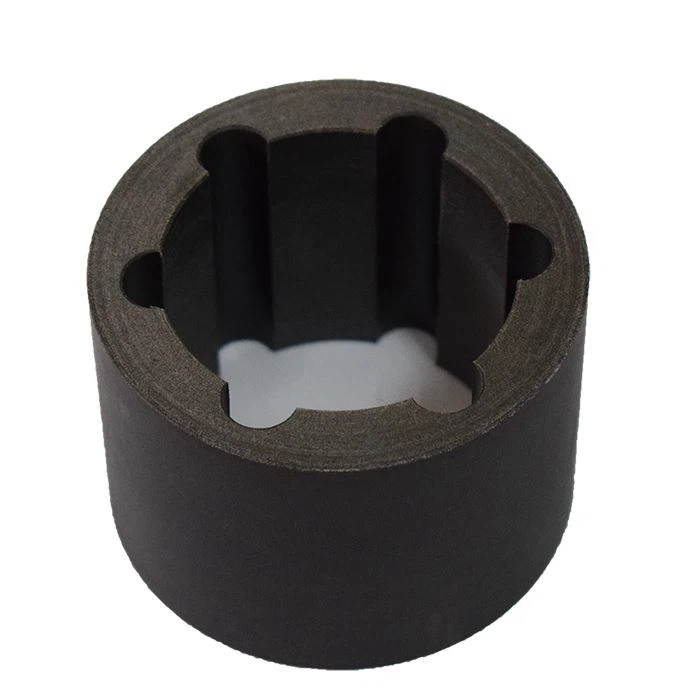

Exceptional load and shock resistance: Composite bearings possess inherent elastic properties, enabling them to withstand high-load and high-shock conditions. Unlike rigid metals or bronze bearings, they can accommodate significant compression, shock, and vibration without deformation.
Outstanding temperature performance: Composite bearings excel in a wide range of temperatures, from cryogenic levels to +330°f, depending on whether they are subjected to continuous or intermittent operating conditions. This makes them suitable for applications involving extreme temperatures where metals may fail.
Customizable design options: With composite materials, the possibilities for custom designs are virtually limitless. Off-the-shelf options are readily available, while customized designs can be tailored to specific applications. Like metals, plastics can be fabricated to create thick or thin wall constructions or reinforced with hybrid designs featuring multiple layers of materials. This versatility helps protect expensive machinery from bearing failure and allows for press fit and freeze fit mounting methods.
Enhanced dimensional stability and corrosion resistance: Unlike metal and bronze plain bearings, composite bearings are highly resistant to rust and corrosion caused by exposure to liquids and chemicals. They can withstand most solutions with minimal pitting or swelling, ensuring long-lasting performance.
Low friction bearings: Composite bearings boast impressive friction performance, with coefficients as low as 0.05 in dry applications and 0.02 in lubricated environments. This makes them a reliable option for applications where friction is a critical concern.
Properties That Make Composites Ideal For Bearings
Because of their unique material properties, composite bearings are used in a wide range of industrial applications, especially where extraordinary bearing performance is required. Here are some of the key properties that make composites ideal for bearings:
Lightweight
Composites typically have a lower density and are much lighter than traditional metal bearings. Lightweighting reduces the overall system mass, which reduces energy consumption and improves the dynamic response of the system.
Corrosion resistance
In chemical, marine, or other corrosive environments, composite bearings can withstand these harsh environments due to the naturally corrosion-resistant properties of their base materials, such as polymers and ceramics.
Self-lubricating
Many composites are designed to have self-lubricating properties, which means they can operate without additional oil or grease. For example, some composites can be embedded with solid lubricants such as graphite or PTFE (polytetrafluoroethylene) to provide continuous lubrication while the bearing is running.
High wear resistance and low coefficient of friction
Composite bearings have an extremely low coefficient of friction and high wear resistance, which contributes to improved bearing efficiency and reduced energy consumption.
Excellent fatigue resistance and high load-carrying capacity
Fiber-reinforced composites can withstand cyclic loads and stresses, showing excellent fatigue resistance. This makes them suitable for applications that need to withstand repetitive loads.
Thermal stability and extended temperature range
Most composites are able to maintain their properties over a wide temperature range, including very high or very low temperatures.
Application of Fiber-Reinforced Composite Bearings
The automotive sector is one of the largest consumers of fiber reinforced composites, driven by the industry's constant pursuit of weight reduction and improved fuel efficiency. Composite bearings are used in various automotive components such as suspension systems, drivetrains, and engine parts, where their lightweight and high-strength properties offer significant advantages.
The aerospace industry is another major application area, benefiting immensely from the superior performance characteristics of fiber reinforced composites. In this sector, weight reduction is paramount as it directly correlates to fuel efficiency and operational costs. Composite bearings are used in aircraft structural components, landing gears, and control surfaces, where their high strength and durability ensure reliable performance under demanding conditions. The increasing production of commercial and military aircraft is expected to drive the demand for fiber reinforced composites in this sector.
In the marine industry, fiber reinforced composite bearings are valued for their excellent corrosion resistance and durability in harsh maritime environments. These materials are used in shipbuilding and marine equipment, where they reduce maintenance costs and extend the lifespan of vessels.
The construction industry is increasingly leveraging fiber reinforced composites for their robustness, lightweight, and resistance to environmental degradation. These materials are used in bridges, buildings, and infrastructure projects, where they offer long-term performance advantages over traditional construction materials.
Industrial applications of fiber reinforced composite bearings include machinery, equipment, and robotics, where the need for high-performance materials is critical. These composites offer exceptional wear resistance and can operate under high loads and speeds, making them ideal for demanding industrial environments.
Product Specifications
|
Bearing And Material Properties |
Unit |
Value |
|
|
Maximum load p |
Static |
N/mm 2 |
100 |
|
|
Dynamic |
N/mm 2 |
80 |
|
Operating temperature |
Minimum |
℃ |
-200 |
|
|
Maximum |
℃ |
260 |
|
Linear coefficient of expansion |
10-6/K |
96.7 |
|
|
Bond strength |
Mpa |
220 |
|
|
Maximum line speed |
M/s |
2.5 |
|
|
Coefficient of friction f |
|
0.09-0.12 |
|
|
Surface roughness , Ra |
μm |
≤0.8 |
|
|
Shaft hardness |
≥20°HRC |
||
Transportation

Our Certificates


FAQ
s one of the leading fiber-reinforced composite bearings manufacturers and suppliers in China, we warmly welcome you to buy fiber-reinforced composite bearings made in China here from our factory. All customized products are with high quality and competitive price. Contact us for more details.
Fiber Resin Rolled Tube Self lubricating Bearings, Fiberglass Reinforced Plain Bearing, filament wound tube