


Polymer Composite Material
Wholesale Polymer Composite Material Supplier
Professional Manufacturing
Lianyi Bearing is a manufacturer and exporter of a full range of tapered roller bearings, deep groove ball bearings and housed ball bearings. There are more than 300 employees, including engineering and technical personnel, and the factory building area is 30,000 square meters.
R&D and Patents
Currently, there are 40 R&D engineers in the R&D department, including more than 20 with master's degree or above. We own more than 30 patents and software copyrights, and have developed one of the most comprehensive sliding bearing R&D systems in the world.
Quality Control
We use advanced automated production lines and testing lines for tapered rollers, deep groove ball bearings, and seated ball bearings. We strictly adhere to the ISO 9001 quality management system to provide you with high-quality and reliable products.
Solution Provider
We provide solutions based on your requirements, specified materials and product structures are available, and will provide a complete DFMEA for the product as soon as possible for subsequent production. And our proprietary materials are competitively priced.


Product Categories
Latest Products


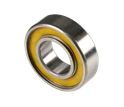
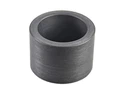
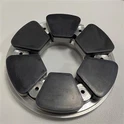
Custom Bearing Specifications
|
Specifications |
Available Options |
|
Bearing Types |
Permanent Self-Lubricated Greaseless Oil Less Maintenance Free Self-aligning |
|
Applications |
Medium-to-Heavy Loads Slow-to-Medium Speeds |
|
Environment |
Wet Dry High Temperature Low Temperature Hostile Irradiated or Radiation Environment |
|
Configurations |
One-Piece Bushings Split Bushings Two-Piece Bushings Flanged Bushings Self-Aligning Spherical Bushing Thrust and Expansion Washers Liners Flat Plates Radialube® Spherilube® Plates Special Shapes |
|
Peripheral Parts |
Support Systems Structural Components Mating Pins Shafts Housings |
|
Manufacturing Process |
CNC Machining Welding Painting |
|
Lubricant Form |
Dry Solid Permanent Self-Lubricating |
Introduction to Polymer Composite Materials

A composite is a material made from at least two or more materials with significantly different chemical and physical properties. When combined, they form another material that has properties different from the individual components. Components are made of two parts: a fibre and a matrix. Fibres can be materials such as polyethylene, glass, carbon fibre, or Kevlar. At the same time, a matrix is what holds the fibres together.
The matrix is usually a thermoset such as an epoxy resin, polydicyclopentadiene, or polyimide. To make the material of the matrix stronger, the fibres are embedded into the matrix. This is one of the most common types of composite materials, called fibre-reinforced composites.
These days, polymer composites have found applications in various fields. They’re physical, chemical, and mechanical properties are what sets them apart from other metals.
Materials Used in Polymer Composites
Now that you know what are composites, it is important to learn what are the types of polymers and other substances that can be used in the mixture, as well as reinforcing materials, loads, and additive agents.
Polymer Matrix
- Polyester resin;
- Vinyl ester resin;
- Epoxy resin;
- PEI/PPS;
- Polyamide.
Loads, Agents, and Additives
- CaCO₃;
- UV absorbers;
- Flame retardants.
Reinforcing Material
- Fiberglass;
- Aramid fiber;
- Carbon fiber.

Classification of Polymer Composite Material
1.Classification Based on the Matrix Material
a.Metal Matrix Composites MMC
As the name suggests, the matrix of this composite material is made from metal. A lighter metal is preferred for structural applications, like aluminum, magnesium, or titanium. This provides compliant support for the reinforcement and the structure as a whole.
b.Ceramic Matrix Composites CMC
In this type of composite, ceramic fibers are embedded in a ceramic matrix phase. This type of structure overcomes the low crack resistance problems faced by conventional ceramic structures. Materials like Carbon, Silicon Carbide, Alumina, etc. are prime candidates for the matrix and dispersed phase both.
c.Polymer Matrix Composites PMC
This type of composite consists of polymer matrices that bind together various short or continuous fibers. The matrices are most often thermosets of resin systems like epoxies, phenolics, and polyamides. PMCs are known for their lightweight, high stiffness, and high strength.
2.Classification Based on Reinforced Material Structure
a.Particle-Reinforced Composites
These are one of the most widely used classes of composite structures due to their ease of availability while being economical. They can be further distinguished based on the strengthening mechanism--particulate and dispersion-strengthened.
b.Fiber-Reinforced Composites
Fiber-reinforced composites provide improved mechanical properties such as strength, strength-to-weight ratio. It incorporates strong, stiff but brittle fibers into a softer, ductile matrix. The matrix acts as a medium to transfer the load to the fibers that do the majority of heavy lifting.
c.Continuous Fiber-Reinforced Composites
In continuous fiber composites, the length of the fibers can vary from a few feet to several thousand feet long. A large advantage is that by allowing a uniform orientation of the raw composite fiber, important design criteria (strength, Y-modulus, CTE) can be enhanced and customized.
d.Discontinuous Fiber-Reinforced Composites
This sub-division of composites is further broken down into two sub-sub-divisions. They are discontinuous aligned fibers and discontinuous randomly oriented fibers.

Properties of Polymer Composite Material
Chemical Properties
- Can be designed for very high chemical stability. The selection of the matrix material and selecting non-absorbent and non-hygroscopic reinforcement fibers guarantee environmental resilience.
- Generally highly corrosion/environment resistant.
- Electrical and thermal conductivity can be engineered to any level from high breakdown voltage insulator up to moderate conductivity, by using appropriate additives and reinforcer materials.
- Achieving flame resistance or retardancy in composites is also a design property that can be highly controlled.
Physical Properties
- The tensile strength of most composites approaches or exceeds that of the reinforcing material.
- The compressive strength is similar to or exceeds the compressive strength of the matrix material. This is despite the fact that the overwhelming bulk of most composites is a reinforcer and not a matrix.
- The bending strength generally greatly exceeds the tensile capacity of the matrix material, as the tensile loads of bending forces are transferred to the reinforcer component and dissipated without fracture.
Reasons Why Composites are Replacing Traditional Materials
Composites Have a High Strength-To-Weight Ratio
Carbon fiber weighs about 25% as much as steel and 70% as much as aluminum, and is much stronger and stiffer than both materials per weight. High-end auto engineers use composites to decrease vehicle weight by as much as 60% while improving crash safety; multilayer composite laminates absorb more energy than traditional single-layer steel.
Composites are Durable
Composites never rust, regardless of their environment (though they are prone to corrosion when bonded to metal parts). Composites have less fracture toughness than metals but more than most polymers. Their high dimensional stability allows them to maintain their shape, whether hot or cold, wet or dry. Engineers choose composites over traditional materials to reduce maintenance costs and ensure long-term stability, major benefits for structures that are designed to last decades.
Composites Open Up New Design Options
Composites offer design options that would be hard to achieve with traditional materials. Composites allow for part consolidation; a single composite part can replace a full assembly of metal parts. The surface texture can be altered to mimic any finish, from smooth to textured. Over 90% of recreational boat hulls are constructed from composites, in part because fiberglass can be molded into a wide range of boat shapes.
Composites are Now Easier to Produce
In the past, engineers had to use a complex lay-up process to fabricate composites, which was time-consuming and restricted the design geometry. Digital Composite Manufacturing (DCM) has changed this. DCM is a patented manufacturing process that fabricates composite parts without manual labor. With DCM, composites can be tailored in three dimensions locally or globally, creating just the right strength, density, and flexibility for the project.
Benefits of Polymer Composite Material Bearings

Strength and Stiffness and Low Friction
When a steel backing is combined with PTFE or POM, the strength and stiffness properties are enhanced by the low friction of the polymer material. The use of a polymer layer such as PTFE also deals with issues such as corrosion and unwanted chemical interactions by providing protection the metallic layer(s).

Many Composite Bearings are Dry-Running
They can be designed so that no grease or lubricant is required, which can be very important for applicants that are sensitive to contamination or other instances where grease could pose a problem. When designed correctly composite bearings can provide extreme low friction, almost eliminate issues with stick-slip, and reduced break-away torque requirements.

Dimenstional Stability
Another issue that composite bearings can address quite well is dimensional stability.Some polymers are especially susceptible to dimensional changes through absorption of water or reactions to temperature variations. The use of composites can significantly reduce those problems.
Applications of Polymer Composite Material
Automotive Industry
Body panels, leaf springs, driveshaft, bumpers, doors, racing car bodies, and so on.
Marine
Fibreglass boat bodies, as well as canoes and kayaks.
Biomedical Applications
Medical implants, orthopaedic devices, MRI scanners, X-ray tables, and prosthetics.
Aircraft and Aerospace Industry
Used in the construction of structural parts for military aircraft, space shuttles, and satellite systems. The main purposes of using PMCs are to reduce aircraft weight, which can improve its performance, and to reduce its costs.
Sports Goods
Used in performance footwear, sports equipment and other sporting goods because of their lightweight and high-strength properties.
Electrical
Panels, housing, switchgear, insulators, and connectors. It also covers electronic devices like capacitors, Li-ion and flexible batteries and covers for digital portable equipment like headphones, etc.
Protective Equipment
Since polymer matrix composites can withstand extreme hot or cold and other hazardous conditions, they are often made as raw materials for bulletproof vests and other armour.
Industrial
Chemical storage tanks, pressure vessels, pump housing, and valves. PMCs are also used in impellers, blades, blower and pump housings, and motor covers.
Structural
Polymer matrix composites are used to repair bridges and other construction materials and equipment like booms and cranes.
Processes of Polymer Composite Material
Open Molding
Composite materials (resin and fibers) are placed in an open mold, where they cure or harden while exposed to the air. Tooling cost for open molds is often inexpensive, making it possible to use this technique for prototype and short production runs.
Closed Molding
Composite materials are processed and cured inside a vacuum bag or a two-sided mold, closed to the atmosphere. Closed molding may be considered for two cases: first, if a two-sided finish is needed; and second, if high production volumes are required.
Cast Polymer Molding
A mixture of resin and fillers are poured into a mold (typically without reinforcements) and left to cure or harden. These molding methods sometimes use open molding and sometimes use closed molding.
Factors Affecting Performance of Polymer Composite Bearing

01
Ambient Temperature
The higher the ambient temperature, the greater the reduction in capacity measurements.
02
Intermittent Operation
Consider that oscillating and reciprocating motion allows for higher P, V, and PV values.

03
Shaft Materials
Materials that are good thermal conductors allow for increased values.

04
Surface Finish
A surface finish that is too smooth will generate higher friction (and more heat), which will lower values.
Maintenance Tips for Polymer Composite Bearing
Step 1: Proper Pre-Cleaning
To start, clean off any leftover grease, corrosion protection coatings and oils. This is a critical step in preserving its operating life while also preventing unwanted contaminants.
Note: Products that come pre-coated might not require this step. This is provided the coating has a micro-thickness and suitable with your lubricants.
Step 2: Proper Fill Quantities
Pay special attention to this step as it often contributes to over- or under-lubricating your linear bearing. Your lubricant fill quantity's is to provide the contact surfaces between metals with consistent lubrication.
Step 3: Calculation Of Bearing Free Space
Using industrial standards, proper fill quantities of lubricated bearings are defined as the percentage of the bearing's free space.
Step 4: Run-In Procedures
During the run-in process, your linear bearing elements are filled with grease to form a grease collar. This method provides even distribution of the base oil where friction surfaces get optimal oil quantity.
Step 5: Filling Your Bearings
Lubricate your linear bearing in a dry & clean environment to minimise any contamination from moisture or debris. Make sure to use a grease gun that's been calibrated or a syringe for smaller amounts. The bearings should then be rotated without load, to distribute the grease evenly through the race.
Innovation Patents
LIANYI Bearing owns more than 30 patents and software copyrights. Our independently developed self-lubricating and water-lubricating materials are unique and have the advantages of oil-free, maintenance-free and low-cost.

Frequently Asked Questions
s one of the leading polymer composite material manufacturers and suppliers in China, we warmly welcome you to buy polymer composite material made in China here from our factory. All customized products are with high quality and competitive price. Contact us for more details.
Thrust bearings, PPS based composite material, Polymer Composite Material