


Metal-polymer Composite Bearings
Wholesale Metal-Polymer Composite Bearings Supplier
Professional Manufacturing
Lianyi Bearing is a manufacturer and exporter of a full range of tapered roller bearings, deep groove ball bearings and housed ball bearings. There are more than 300 employees, including engineering and technical personnel, and the factory building area is 30,000 square meters.
R&D and Patents
Currently, there are 40 R&D engineers in the R&D department, including more than 20 with master's degree or above. We own more than 30 patents and software copyrights, and have developed one of the most comprehensive sliding bearing R&D systems in the world.
Quality Control
We use advanced automated production lines and testing lines for tapered rollers, deep groove ball bearings, and seated ball bearings. We strictly adhere to the ISO 9001 quality management system to provide you with high-quality and reliable products.
Solution Provider
We provide solutions based on your requirements, specified materials and product structures are available, and will provide a complete DFMEA for the product as soon as possible for subsequent production. And our proprietary materials are competitively priced.


Product Categories
Latest Products


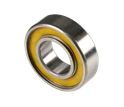
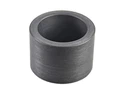
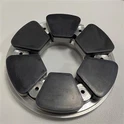
Custom Bearing Specifications
|
Specifications |
Available Options |
|
Bearing Types |
Permanent Self-Lubricated Greaseless Oil Less Maintenance Free Self-aligning |
|
Applications |
Medium-to-Heavy Loads Slow-to-Medium Speeds |
|
Environment |
Wet Dry High Temperature Low Temperature Hostile Irradiated or Radiation Environment |
|
Configurations |
One-Piece Bushings Split Bushings Two-Piece Bushings Flanged Bushings Self-Aligning Spherical Bushing Thrust and Expansion Washers Liners Flat Plates Radialube® Spherilube® Plates Special Shapes |
|
Peripheral Parts |
Support Systems Structural Components Mating Pins Shafts Housings |
|
Manufacturing Process |
CNC Machining Welding Painting |
|
Lubricant Form |
Dry Solid Permanent Self-Lubricating |

Consisting of a metal backing for high mechanical strength and a sintered bronze layer, Metal-Polymer bearings are impregnated with an anti-friction overlay enriched with PTFE or high performing thermoplastic combined with fillers to obtain an optimal running surface.
Offering superior anti-friction and wear-resistant properties, Metal-Polymer bearings can operate dry or with external lubrication - delivering superior performance through its unique composite structure. Ideal for hundreds of applications in a variety of global industries, Metal-Polymer solutions are easily customized for customer specifications and requirements: from grooves and holes for lubricant to punched and stamped shapes.
Function 1: Reduce friction and make rotation more smooth
Friction is bound to occur between the rotating shaft and the part that supports the rotation. Bearings are used between these two components.The bearings serve to reduce friction and allow for smoother rotation. This cuts down on the amount of energy consumption. This is the single most important function of bearings.
Function 2: Protect the part that supports the rotation, and maintain the correct position for the rotating shaft
A large amount of force is needed between the rotating shaft and the part that supports the rotation. Bearings perform the function of preventing damage from being done by this force to the part that supports the rotation, and also of maintaining the correct position of the rotating shaft.


Structural composite materials can be classified as follows:
Sandwich Structures: Composed by a core and layers. They allow to improve the mechanical properties but without an excessive increase of weight. They also improve thermal and acoustic insulation.
Monolithic Structures: Parts with a complex geometry, formed by overlapping fabrics with particular orientations that allow obtaining specific characteristics. This kind of parts is intended to withstand the heaviest structural loads.
Types of Metal-Polymer Composite Bearings
1.Ball Bearings
Ball Bearings utilize balls as the rolling elements. They are characterised by point contact between the balls and the raceways. As a rule, ball bearings rotate very quickly but cannot support substantial loads.
a.Deep-Groove Ball Bearings
The most commonly used bearings are Deep-Groove Ball Bearings. Thanks to their simple design, they are easy to maintain and not as sensitive to operating conditions thus are used in a wide range of different applicaitons.
b.Angular Contact Ball Bearings
Angular Contact Ball Bearings are characterised by a contact angle. This means that forces are transferred from one raceway to the other at a particular angle.
c.Self-Aligning Ball Bearings
Self-Aligning Ball Bearings include a double row of balls guided by a cage and double row inner ring raceway but have the special feature of a continuous spherical outer ring raceway allowing the inner ring / ball complement to swivel within the outer ring. This is what enables a degree of self-alignment in the application.
d.Thrust Ball Bearings
Thrust Ball Bearings consist of two bearing discs with raceways for the balls.
2.Roller Bearings
Roller Bearings are characterized by line contact. Line contact offers higher load rating than ball bearings of the same size; however the speed ability is lower than a ball bearing due to the increased friction of a contact line.
a.Spherical Roller Bearings
Spherical Roller Bearings are very robust and work on the same principle as Self-aligning bearings with the exception that they use spherical rollers instead of ball rollers allowing higher loads to be supported.
b.Cylindrical Roller Bearings
Cylindrical Roller Bearings use line contact between the rolling elements and the raceways, which optimizes the distribution of stress factors at the point of contact. This arrangement means that cylindrical roller bearings have a very high radial load rating.
c.Tapered Roller Bearings
Tapered Roller Bearings have tapered raceways in the inner and outer rings with conical rollers arranged between them.
d.Needle Roller Bearings
Needle Roller Bearings are a special type of cylindrical roller bearing which contain long, thin rolling elements, known as needle rollers. The ratio of diameter to length is between 1:3 and 1:10.
Benefits of Metal-Polymer Composite Bearings
1.High Performance
The special characteristics of the metal/polymer composite plain bearings are due to the combination of plastic and metal. This material combination allows low-wear sliding characteristics together with high load carrying capacity and thermal conductivity.
2.Cost Savings
High-performance metal-polymer composite bearings reduce overall cost because they resist wear, reduce maintenance costs, and can replace more costly alternatives.
3.No Need to Lubricate
These bearings are self-lubricating, with lubricants embedded in the tiny chambers of the composite material. This eliminates the costs of both additional lubricants and continual maintenance.
Corrosion Resistant
Metal-polymer composite bearings are specifically designed to operate in harsh environments, surviving daily washdowns and caustic chemicals. Plus, their self-lubricating nature eliminates seal failure and contamination.
Consistent COF
These bearings are designed to maintain a low COF over their lifetime, while their metal-backed counterparts can become scratched and increase the COF.
Lighter Weight
Metal-polymer composite bearings are significantly lighter than their metal alternatives, which can be up to five times heavier.


Applications of Metal-backed Composite Sliding Bearings
TI bearing doesn’t contain bronze. Thus, TI bushings are mainly used into chemical industries. Its corrosion resistance allows it to be mounted in various applications such as swimming pool elements or navy. TI bushings are also popular in the agro-food industry.
TU bearing is used in industrial applications, with professional and general public materials such as printing, robotic, handling, automotive, electric household appliances.
TX bearing is usually used in severe environments, mainly in agriculture and construction and public works. Web also find it in warehouse systems, ski lifts or office furniture.
TY bearing is mainly used for hard loads applications which require a particular greasing such as construction and public works, presses and rolling-machines. More compact, TY bushings replace advantageously bronze worked bushings.
TZ bearing, with a robust design, is well-adapted to hard loads and is particularly adapted to transport vehicles, presses, rolling-machines and all other industrial systems.
Factors affecting performance of Bearings
Combined Effects of Friction, Lubrication & Temperature
All three of these factors - friction, lubrication, and temperature - combine to affect bearing performance. Friction and viscosity of the lubricant work together to increase bearing temperature. Heat will dissipate into the shaft and bearing housing, with the lubricant helping to stabilize operating temperatures. Too much lubricant can negatively affect bearing performance by causing temperatures to rise; however, a general rule is that lubricant should fill 25-35% of the empty space in the bearing.
Significant differences in temperature between the inner and outer race reduce the clearance of a bearing. This is a problem while running at a steady speed and, especially shortly after startup. Increased rise in temperature, therefore, affects a bearing’s service life and is why using higher-quality lubricants can help improve the lifespan of a motor.
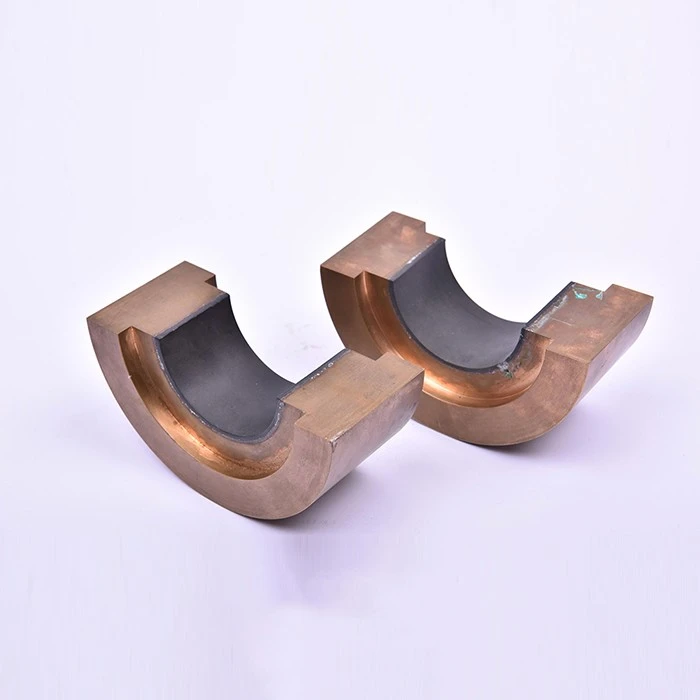

- They can be fixed to the installation in a number of different ways: bolting, full welding, tack welding and mortar embedment.
- You need to choose the correct slide bearing configuration to match the installation method.
- Metal-polymer composite bearings need to be handled carefully and protected to keep the contact surfaces clean and debris-free.
- The overall load of the structure needs to be calculated so we can ascertain the total area required at the relevant temperatures and pressures.
- You don’t need to be a technical expert to source the right slide bearings for your project. Give us a call and we’ll talk through it with you.
How to Maintain Metal-Polymer Composite Bearings
Handle and Store Correctly
To avoid contaminants including moisture, dust, or dirt entering the bearing, they should be handled and stored correctly. Firstly, bearings should be stored horizontally in their original packaging in a clean, dry, and room temperature environment.
Use Specialist Tools
Additionally, appropriate equipment should be used when handling bearings. Tools that are not specialised for use during the bearing mounting and dismounting process can cause unnecessary damage, denting, and wear.
Check the Bearing Housing and Shaft
Inspect the physical condition of the housing and shaft prior to mounting the bearing. Use a soft cloth to wipe the surfaces clean, before familiarizing yourself with the correct mounting method.
Mount Correctly
You should use the correct method when mounting your bearings and this varies depending on the type of bearing and type of fit. Radial ball bearing rings can be mounted with a variety of fits from sliding fits to tight press fits, depending on the type of load, the speed, and vibration levels.
Get Your Lubrication Right
One of the leading causes of bearing failure is lubrication failure. This encompasses using the incorrect lubricant, as well as using too much or too little lubrication. The correct lubricant is chosen by considering the environmental conditions, temperature, speed, and load.
Where Possible, Prevent Corrosion
Corrosion is the natural enemy of bearings. Over time, if bearings are exposed to moisture, corrosion will occur. This can lead to rust entering the raceway and ultimately, premature bearing and equipment failure. Wearing gloves will ensure that perspiration or other liquids do not enter the bearing. When designing specifically for corrosive environments, selecting the right bearing is key.
LIANYI Bearing owns more than 30 patents and software copyrights. Our independently developed self-lubricating and water-lubricating materials are unique and have the advantages of oil-free, maintenance-free and low-cost.

Frequently Asked Questions
Q: What are polymer bearings?
Q: What are composite bearings made of?
Q: What metal is used for bearings?
Q: What type of bearing lasts the longest?
Q: What is the strongest type of bearing?
Q: What grade of steel are bearings made of?
Q: What is the best steel for bearings?
Q: What are the new materials for bearings?
Q: What is the best bearing for heavy load?
Q: Are needle bearings better than ball bearings?
Q: Are ball bearings better than sleeve bearings?
Q: Why are they called 608 bearings?
Q: Which alloy is high quality steel for gears and bearings?
Q: What is the difference between 608 ZZ and 2RS bearings?
Q: What is the difference between 608 RS and ZZ bearings?
Q: What are big end bearings made of?
Q: Which is the most commonly used bearing material?
Q: Why do bearings fail?
Q: How can I make my bearings quieter?
Q: What is the smoothest ball bearing?
Q: What is the most common bearing size?
Q: How do I choose a bearing type?
- Load. Load magnitude, type and direction which applied.
- Rotational speed. Response to rotational speed of equipment in which bearings will be installed.
- Running accuracy.
- Rigidity.
- Misalignment.
- Mounting and dismounting.
s one of the leading metal-polymer composite bearings manufacturers and suppliers in China, we warmly welcome you to buy metal-polymer composite bearings made in China here from our factory. All customized products are with high quality and competitive price. Contact us for more details.
plastic machinery bearings, cutting machine bearings, self aligning bearings