


Solid oil bearings are a type of high - performance bearing that has gained significant attention in various industries due to their excellent lubrication properties, long service life, and ability to operate under harsh conditions. As a solid oil bearings supplier, I'm often asked about the materials used to make these bearings. In this blog post, I'll delve into the key materials that go into the production of solid oil bearings, highlighting their characteristics and benefits.
1. Bearing Rings
The bearing rings are the outer and inner components of the bearing that house the rolling elements. They play a crucial role in providing structural support and guiding the motion of the rolling elements.
Steel
Most commonly, bearing rings are made of high - quality steel, particularly chrome steel (such as AISI 52100). Chrome steel offers excellent hardness, wear resistance, and fatigue strength. These properties are essential for bearings because they have to withstand repeated loads and rolling contact stress. For instance, in high - speed machinery like electric motors, the bearing rings need to be tough enough to prevent deformation and surface damage over long periods of operation.
Stainless steel is another option for bearing rings. It is chosen when the bearing will be used in corrosive environments, such as in food processing equipment or marine applications. Stainless steel bearings can resist rust and corrosion, ensuring the reliability and longevity of the bearing even when exposed to moisture, chemicals, or saltwater.
Ceramics
In some high - performance applications, ceramic materials are used for bearing rings. Silicon nitride (Si₃N₄) is a popular choice. Ceramic bearing rings have several advantages over steel. They are lighter, which reduces the overall weight of the bearing assembly and can improve the efficiency of the machinery. Ceramics also have a higher hardness and lower coefficient of thermal expansion, making them suitable for high - temperature and high - speed applications. For example, in aerospace engines, ceramic bearing rings can operate at extremely high speeds and temperatures without significant wear or deformation.
2. Rolling Elements
The rolling elements, such as balls or rollers, are the components that roll between the bearing rings, reducing friction and enabling smooth rotation.
Steel
Similar to bearing rings, steel is a common material for rolling elements. Chrome steel balls or rollers are widely used in general - purpose bearings. They offer good hardness and toughness, which are necessary for withstanding the contact stress during rolling. The manufacturing process for steel rolling elements is well - established, allowing for high - precision production and consistent quality.
Ceramics
Ceramic rolling elements are becoming more prevalent in advanced applications. Zirconia (ZrO₂) and silicon nitride are the two commonly used ceramic materials for this purpose. Ceramic rolling elements have a lower density than steel, which results in reduced centrifugal forces at high speeds. This allows the bearings to operate at higher rotational speeds without excessive stress. Additionally, ceramics are electrically insulating, which can prevent electrical corrosion in some applications, such as in electric motors with variable - frequency drives.
3. Solid Oil
The solid oil is the unique feature of solid oil bearings. It serves as a lubricant that gradually releases oil to lubricate the bearing surfaces during operation.
Polymeric Matrices
Solid oil is typically composed of a polymeric matrix that holds the lubricating oil. The polymer can be a type of thermosetting plastic, such as epoxy resin or phenol - formaldehyde resin. These polymers have good mechanical strength and can form a stable structure to encapsulate the lubricating oil. The polymeric matrix also has the ability to control the release rate of the oil. It can slowly release the oil over time, providing long - term lubrication to the bearing without the need for frequent re - lubrication.
Lubricating Oils
A variety of lubricating oils can be used in solid oil, depending on the application requirements. Mineral oils are commonly used due to their good lubrication properties and relatively low cost. They are suitable for general - purpose applications where the operating conditions are not extremely harsh.
For high - temperature or high - performance applications, synthetic oils are preferred. Synthetic oils, such as polyalphaolefins (PAO) or esters, have better thermal stability, oxidation resistance, and low - temperature fluidity compared to mineral oils. For example, in automotive engines, synthetic - oil - based solid oil bearings can operate at high temperatures and provide reliable lubrication, reducing wear and extending the service life of the bearings.
4. Cage (Optional)
The cage is an optional component in solid oil bearings. Its main function is to separate the rolling elements and maintain an even spacing between them, ensuring smooth operation.
Steel
Steel cages are commonly used in many types of bearings. They are strong and durable, capable of withstanding the forces and vibrations during bearing operation. Steel cages are often manufactured using stamping or machining processes, which allow for precise control of the cage dimensions and shape.
Polyamide
Polyamide cages are another popular choice, especially in applications where low noise and light weight are required. Polyamide has good self - lubricating properties, which can further reduce friction between the cage and the rolling elements. In addition, polyamide cages are resistant to chemicals and have good elasticity, which helps to dampen vibrations and reduce noise levels.

Product Offerings
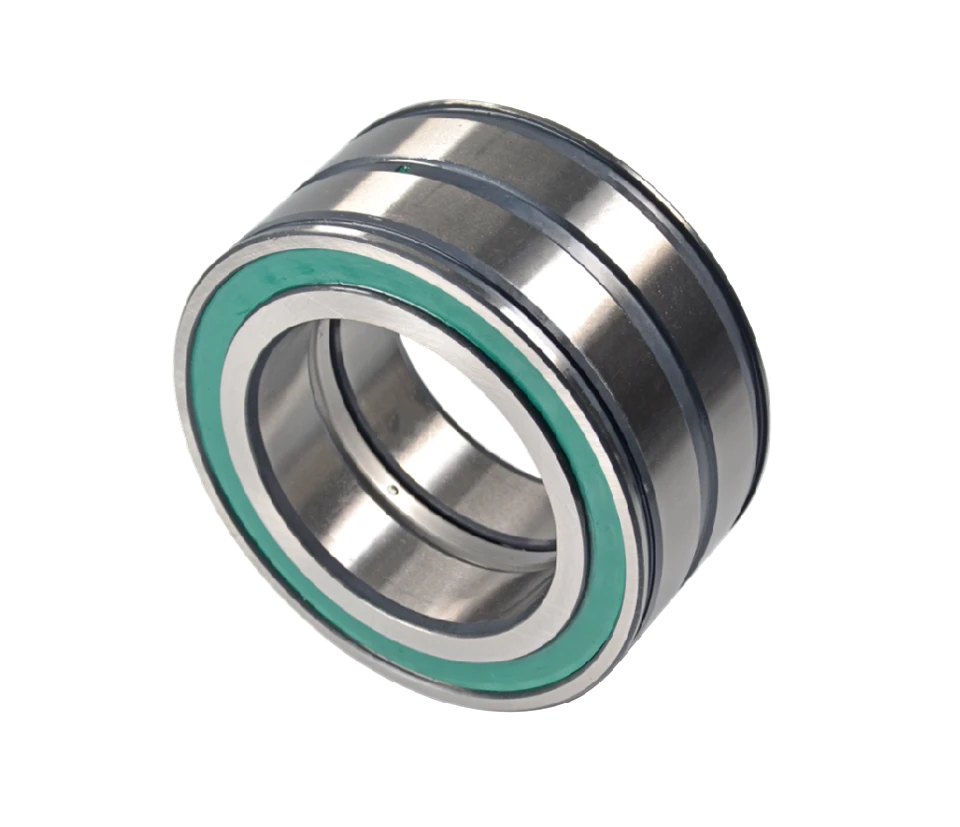
As a solid oil bearings supplier, we offer a wide range of solid oil bearings to meet different customer needs. For example, our Graphene Lubricating Bearing enhances lubrication performance with the addition of graphene, providing lower friction and better wear resistance. We also have Solid Oil Cylindrical Roller Bearings, which are suitable for applications requiring high radial load capacity. And our Solid Oil Self - aligning Roller Bearings can accommodate misalignment and provide reliable operation in various industrial settings.
Contact for Procurement
If you are interested in our solid oil bearings and would like to discuss procurement details, or if you have any specific requirements for bearing materials or applications, please feel free to reach out. Our team of experts is ready to provide you with professional advice and customized solutions to meet your needs.
References
- Harris, T. A., & Kotzalas, M. N. (2007). Rolling Bearing Analysis. John Wiley & Sons.
- Schmid, S. R. (2016). Handbook of Lubrication and Tribology, Volume I: Application and Maintenance. CRC Press.
- Gupta, P. K. (2009). Ball and Roller Bearing Engineering. CRC Press.


