


Hey there! I often get asked about the creep resistance of these amazing materials. So, let's dive right in and explore what creep resistance is and why it matters when it comes to PEEK based materials.
First off, what's creep? Creep is the tendency of a material to deform slowly over time when it's under a constant load. You can think of it like stretching a rubber band and holding it in place. At first, it stretches to a certain point, but if you keep holding it, it'll gradually stretch a bit more over time. That's creep in action.
Now, why is creep resistance so important? Well, in a lot of applications, materials need to maintain their shape and dimensions over long periods while under stress. For example, in aerospace components or high - performance machinery parts, any deformation can lead to malfunctions or even safety issues. That's where PEEK based materials really shine.
PEEK, or polyetheretherketone, is a high - performance thermoplastic. It has some pretty impressive properties that contribute to its excellent creep resistance. One of the key factors is its strong molecular structure. The chemical bonds in PEEK are very stable, which means the material can withstand a fair amount of stress without its molecules sliding past each other easily. This stability helps it resist the slow deformation that we call creep.
Another aspect that affects the creep resistance of PEEK based materials is the way it's processed. When we manufacture PEEK based products, the right processing conditions can enhance its creep - resistant properties. Things like the temperature during molding and the cooling rate play a crucial role. If we get these parameters just right, we can create a material that has a more uniform and dense structure, which in turn improves its ability to resist creep.
Let's compare PEEK based materials with some other common polymer - based materials in terms of creep resistance. Take Nylon Based Composite Material for example. Nylon is a widely used polymer, but it generally has lower creep resistance compared to PEEK. Nylon's molecular structure is not as rigid as PEEK's, so under long - term stress, it's more likely to deform.
Uhmwpe Based Composite Material, or ultra - high - molecular - weight polyethylene, is another material. While UHMWPE has some great properties like high impact resistance, its creep resistance is also not as good as PEEK. UHMWPE's molecules are more flexible and can move around more easily under stress, leading to more significant creep over time.

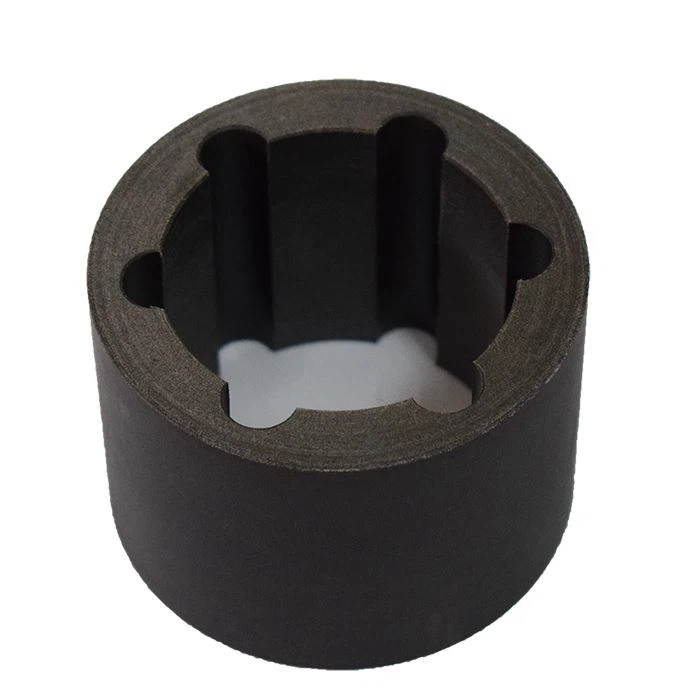
Pps Based Composite Material, or polyphenylene sulfide, is a high - performance polymer too. It has better creep resistance than some common polymers, but still, PEEK outperforms it in many cases. PEEK can handle higher temperatures and more intense stress levels without showing as much creep as PPS.
The creep resistance of PEEK based materials also depends on the additives and reinforcements we use. We often add things like carbon fibers or glass fibers to PEEK. These reinforcements act like a skeleton within the material. They help distribute the load more evenly, reducing the stress on the PEEK matrix and further enhancing its creep resistance. For instance, a PEEK material reinforced with carbon fibers can have significantly better creep performance compared to pure PEEK.
Temperature is another big factor. As the temperature goes up, the creep rate of most materials increases. But PEEK based materials are pretty resilient. They can maintain their creep resistance at relatively high temperatures. This makes them suitable for applications where the operating environment is hot, such as in automotive engines or industrial ovens.
In addition to temperature, the duration of the load also matters. The longer a load is applied, the more likely creep is to occur. However, PEEK based materials are designed to handle long - term loads. They can resist deformation over extended periods, which is a huge advantage in applications like structural components in buildings or long - running machinery.
Now, you might be wondering how we test the creep resistance of PEEK based materials. There are standard testing methods out there. Usually, we apply a constant load to a sample of the material at a specific temperature and measure how much it deforms over time. By analyzing the data from these tests, we can get a clear picture of how well the material will perform under real - world conditions.
As a supplier of PEEK based materials, I can tell you that we take great care in ensuring the quality and creep resistance of our products. We use the latest manufacturing techniques and conduct rigorous testing to make sure that our materials meet the highest standards. Whether you're in the aerospace, automotive, or any other industry that requires high - performance materials, our PEEK based products can be a great choice.
If you're looking for a material that can withstand long - term stress without deforming, PEEK based materials are definitely worth considering. And if you're interested in learning more or want to start a procurement discussion, don't hesitate to reach out. We're here to help you find the right PEEK based material for your specific needs.
References
- "High - Performance Polymers: Their Origins, Developments, and Properties"
- "Polymer Science and Engineering" textbooks


