


Hey there! As a supplier of Peek Based Material, I'm super stoked to chat with you about how this amazing stuff performs in abrasive environments. So, let's dive right in!
First off, what the heck is Peek Based Material? Well, it's a high - performance polymer that's got some seriously cool properties. Peek Based Material is known for its excellent mechanical strength, chemical resistance, and thermal stability. But today, we're gonna focus on how it holds up when things get rough and abrasive.

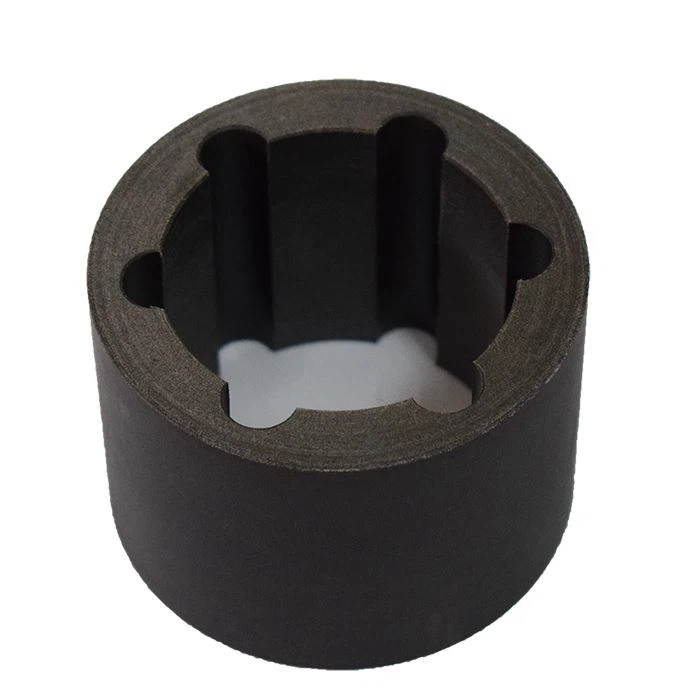
In abrasive environments, materials are constantly being rubbed, scraped, or worn down. Think of industrial machinery where parts are in constant contact with each other, or mining operations where there's a ton of dust and grit flying around. This kind of wear and tear can really take a toll on regular materials, but Peek Based Material is a different story.
One of the key factors that make Peek Based Material so great in abrasive settings is its hardness. It's got a relatively high hardness level, which means it can resist being scratched or gouged easily. When compared to some other common materials like Nylon Based Composite Material and Uhmwpe Based Composite Material, Peek Based Material often comes out on top in terms of abrasion resistance.
Nylon based composites are pretty good, don't get me wrong. They're lightweight and have decent mechanical properties. But in really abrasive conditions, they can start to show signs of wear more quickly. The same goes for Uhmwpe based composites. While they're known for their self - lubricating properties, they may not be as tough as Peek Based Material when it comes to withstanding heavy abrasion.
Another aspect that contributes to the performance of Peek Based Material in abrasive environments is its low friction coefficient. This means that when it comes into contact with other surfaces, there's less resistance and less heat generated. Less heat is a big deal because excessive heat can actually soften a material and make it more prone to wear. With Peek Based Material, the low friction helps keep the temperature down and reduces the amount of wear over time.
Let's talk about some real - world applications. In the automotive industry, Peek Based Material is used in engine components. These components are exposed to a lot of friction and abrasion from moving parts and the high - speed rotation of the engine. Thanks to its abrasion resistance, Peek Based Material can last longer and reduce the need for frequent replacements. This not only saves money but also improves the overall reliability of the vehicle.
In the aerospace sector, where weight and performance are critical, Peek Based Material is a go - to choice for parts that are exposed to abrasive conditions. For example, in aircraft landing gear systems, the parts need to be able to withstand the constant rubbing and scraping that occurs during takeoff and landing. Peek Based Material provides the necessary strength and abrasion resistance while also being lightweight, which is a huge advantage in aerospace applications.
Now, let's get a bit technical. The molecular structure of Peek Based Material plays a big role in its abrasion resistance. The polymer chains in Peek are highly ordered and tightly packed. This gives the material a strong internal structure that can better resist the forces of abrasion. When an abrasive particle tries to break through the surface of the material, it has to work much harder to disrupt these well - organized chains.
But it's not just about the base polymer. Sometimes, Peek Based Material can be further enhanced with additives. These additives can include things like carbon fibers or glass fibers. When added to the Peek matrix, these fibers can increase the material's stiffness and abrasion resistance even more. The fibers act like reinforcements, making it even tougher for abrasive particles to cause damage.
However, it's important to note that while Peek Based Material is great in abrasive environments, it's not invincible. There are still some limitations. For example, in extremely high - pressure abrasive situations, even Peek Based Material may start to show signs of wear. And if the abrasive particles are extremely hard and sharp, they can still cause some damage over time.
But overall, the performance of Peek Based Material in abrasive environments is really impressive. It offers a great combination of hardness, low friction, and a strong molecular structure that allows it to stand up to the rigors of abrasive conditions.
If you're in an industry where your materials are constantly facing abrasion, you might want to consider switching to Peek Based Material. It could save you a lot of headaches in the long run. Whether you're in manufacturing, automotive, aerospace, or any other field where abrasion is a concern, Peek Based Material can be a game - changer.
So, if you're interested in learning more about how Peek Based Material can work for your specific application, or if you're ready to start a procurement discussion, don't hesitate to reach out. We're here to help you find the best solution for your needs.
In conclusion, Peek Based Material is a top - notch choice for abrasive environments. Its unique properties make it a reliable and long - lasting option compared to other materials. So, why not give it a try and see the difference it can make in your operations?
References
- "High - Performance Polymers: A Comprehensive Guide" by Polymer Science Press
- "Abrasion Resistance of Engineering Polymers" in the Journal of Materials Science and Engineering


